 Telegram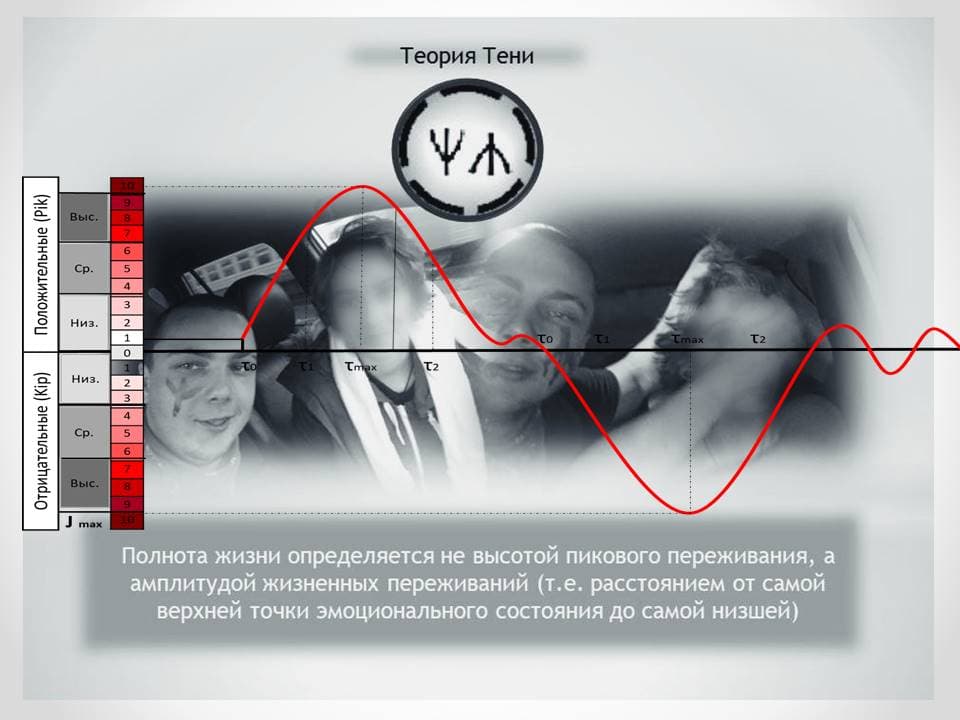
The Amplitude of Human Passions
AHP? — not SII!
HTMC? — not MDP!
GQW? — not CCRF!
Good Samaritan? — not some nasty sado-narcissist.
Alienist? — not egoist.
Excelsior; an in-between move — that’s how 2020 began. This too shall pass soon enough. 📅
Odin’s sacrifice — or the religion of comfort?
Odin gave up an eye in exchange for knowledge. Sacrificing himself for wisdom was hardly foreign to him. To grasp the power of the runes, he went further still and offered himself as the sacrifice.
“A question as old as humanity itself: the two forces within us. Most often we describe them as enemies — white and black, yin and yang, good and evil. We stand between Scylla and Charybdis, freed from the instincts that would determine our existence and therefore condemned to choose, again and again. Body and spirit: passions on one side, conscience on the other. The sheer number of theories and teachings produced over the last two thousand years tells us how persistent this question is — from the ancient Vedas to transactional analysis. Great minds kept returning to it: Plato with his myth of the chariot, Freud with his Ego and Id. We keep describing these forces as if they were at war with one another. But are they?”
All this Gay Science doesn’t tell you a damn thing. ⚕
“Is my life not turning into dust?
Trapped among these bookshelves, almost like a prisoner?
Here, in a hundred books, I read the same verdict:
mankind has always lived in want,
and happiness was the exception.”
Sure, education is grand — but theory is not life.
What won’t an academic environment teach you?
What kind of knowledge never reaches the lecture hall? 📚
“You look perfectly healthy, but once you start digging through yourself,
you spend your whole time on a fruitless search for someone built like you.”
(Oxxxymiron, “Не от мира сего”)
➕
“Books hand out opinions, opinions sow doubt,
doubt breeds sloth, and sloth breathes oblivion.
Michel Houellebecq, Lautréamont, plus the Necronomicon,
and once again the world’s a target — payback.”
(Oxxxymiron, “Не от мира сего”)
But there is another world running parallel to this one. I’m going to dive into it; out here, only a few minutes will pass.
Let’s go 🛑
Snowflakes settle on green grass.
I crossed the mountains and came to the edge of the continent.
Among the wreckage of merchant caravels you’ll find her —
with a Madonna’s face and a Gorgon’s gaze.
Born to crawl, yet desperate to fly.
How many feathers are left to gather?
How much more must be sacrificed?
Drive Eros away?
But human, all too human.
Eros said:
“No. You’ll be like everyone else. You’ll worship me alone.”
And there, fighting Eros himself, I found a compass — and an answer:
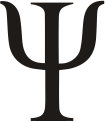
“Only one who has tasted battle for Ψ
has earned Ψ — and freedom.”
And even Eros did not win that time.
Nosce te ipsum rang louder than words.
“And I heard the call — in the far-off barking of dogs, in the muttering of the woods; I sensed something there: a twilight consciousness cutting through pain.”
(Thomas Mraz feat. Oxxxymiron, “Stereocoma”)
Ad profundum — all the way down.
And then I could see it:
A fishing boat was trying to pull a maiden up from the depths.
The fisherman had his bugs, like every middle manager,
and on top of that he was afraid of water.
Ha. Same old story…
He couldn’t see that what he was really hauling up was himself.
At the edge of myself — one step forward, into far-off lands.
There Faust wandered, looking for himself.
Socrates danced the perfect dance, insisting he didn’t know a damn thing.
Plato rolled past in his chariot, though the horses wanted none of it.
Khayyam, drunk on wine, shouted that truth was inside him.
A little farther on stood Descartes,
lost in his own coordinate system.
Cogito, ergo sum — his lips kept saying.
On the shore Montaigne laid out his Essays — for himself.
Out of the depths burst Nietzsche, having forgotten his scuba gear —
the pressure drove him mad.
Nearby Kant marveled at the stars
within himself and beyond himself,
proclaiming the moral imperative,
but Nam vitiis nemo sine nascitur.
Above the Vienna Woods hovered Grandpa Freud,
dipping ever so slightly into his unconscious.
Had he reached gonadal peace by then?
One step farther — o tempora, o mores!
Psychotherapists splintered into schools and lost the feeling that they were kin.
They ought to have been brothers and sisters around one fire; instead every school swore that it alone was right.
A bunch of rationalists twirled their fingers at their temples.
Empiricists clutched their hearts and felt only themselves.
Confucius, Krishna, Lao Tzu; then Buddha, Muhammad, Jesus the Messiah —
they offered food to everyone who arrived, yet the crowd kept gorging from the trough of lust,
as it has in every age……………………………….
That’s it. Time to go back.
But I will remember all of this forever.
Noble ends, but not the means — right? Fine. I chose the means myself. You were right. 🌲🌷
“Know what I mean? No. Probably not.
You’ll say: ‘What kind of heresy is this?’
We were taught to live soberly, without fairy tales or superstition.
But deep in the forest Pan is playing his pipes.
I hear the trill, whatever mask he puts on.”
(Thomas Mraz feat. Oxxxymiron, “Stereocoma”)
“Poets” and “Atlases” have existed in every age!!!
-
*“That is how poets lived. Reader, my friend!
You think, perhaps, their lot was worse
than your daily impotent strain,
your petty-bourgeois puddle?No, dear reader, blind critic of mine!
At least the poet has braids and clouds and a golden age —
all that is closed to you!You’ll be content with yourself and your wife,
with your stunted constitution;
but the poet’s on a worldwide bender —
one constitution is never enough!”*
(Alexander Blok, “Poets”) -
“They’ll live a hundred lives, taking risks —
will you even live one?”
(Grot, “More Than Alive”)
✅ The point
“If I gave myself over to futile regret because my mistake had destroyed my past, that would be the greatest betrayal — complete bankruptcy before this truth. But if love of truth remained my last possession, then the more I lost, the more proudly I could face the price I had paid for that love. The wreckage of the past would no longer be a burial mound over me, but the summit I had climbed in order to see farther. Pride and the ability to see — those were all I possessed when I began, and everything I achieved came from them. Now both are stronger. Now I have the awareness of a higher value that I lacked before: the right to take pride in my vision of the world. Everything else I can still achieve.”
Abbreviations
AHP — Amplitude of Human Passions
(amplitude of emotional experience)
SII — sense of self-importance
HTMC — high-tech medical care
MDP — manic-depressive psychosis
GQW — graduation qualifying work
CCRF — Criminal Code of the Russian Federation
Questions about this article
01What is stronger in a person — passion, or reason and conscience?
The text does not name a simple winner. It presents inner duality as a recurring choice between passion and conscience, the pursuit of knowledge and comfort. These forces cannot be reduced to a simple opposition of good and evil; their balance emerges through lived experience and responsibility for one’s own choices.
02Why are knowledge and theory alone not enough to understand yourself?
Because theory only gives us a language for asking questions, while self-knowledge is formed through lived choices, risk, giving up part of one’s comfort, and a willingness to pay the price for one’s own path. Myths, philosophy, and poetry can serve as guides, but they cannot replace personal experience.