
 Telegram
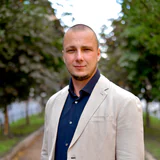
A New Academic Year
The good old narrative: autumn is here, and with it another year of study — my twenty-first already. At some point I realized that I could no longer take this distance in a single charge. I cannot simply pour myself a coffee, make one big push, and hope the dissertation somehow comes together on its own. Doctoral study turned out not to be a sprint, but a long-distance run.
This year I settled on a simple formula for myself: discipline, education, and faith. The whole text rests on those three things.
Discipline
The strangest discovery has been that more often than not I need to slow myself down rather than push myself forward. Not to live in bursts, but to learn a steady pace. Not to rush around, but to distribute my effort across the distance.
I am becoming increasingly clear about what actually brings me back into a working state:
- running and training;
- reading;
- a normal eating routine;
- teaching and massage practice.
Self-awareness points me in the right direction, while discipline keeps me from scattering my energy.
Your professional life resembles a marathon that gradually turns into a decathlon.
Education
Learning stopped being a function of status for me a long time ago; it became a way of living. It does not end, and it does not promise complete knowledge. Quite the opposite: the farther you go, the more clearly you see that you will never reach the end. And that is precisely what keeps the journey alive.
I am drawn to the metaphor of a door that will not open. You keep pushing against it again and again, and the effort you accumulate does not disappear. Sometimes an opportunity appears suddenly precisely because you were already in shape and did not leave too early.
Faith
For me, faith is not reducible to a name or a ready-made system. It is what keeps an inner vector steady when there is too much noise around me.
Depth psychology understands that the goal of life is not happiness, which is always temporary, but meaning.
There are experiences from which, over time, not weakness but fuel can grow. Pain, mistakes, longing, tension — all of it can be smelted into a more collected form of life.
Do you still remember, ardent soul,
How then we languished in that thirst,
Longing to understand the human world,
Dreaming beneath the stars at night
Of a world of possibilities beyond the darkened forest.
We read Fromm and laid the foundations.
And believed that life could be lived differently.
Resolute to follow the sound of the drum,
That rang so clearly in his soul.
And here we are — with love for the work and clear eyes.
Sources
- Sallenbacher J. “Creative Personal Branding”.
- McGonigal K. “The Willpower Instinct”.
- Montaigne M. “Essays”.
- Nietzsche F. “Thus Spoke Zarathustra”.
- Hollis J. “The Middle Passage”.
Questions about this article
01What helps a person sustain a long academic journey?
The author relies on a combination of discipline, lifelong education, and faith. Discipline establishes a sustainable pace, learning keeps the journey alive, and faith preserves an inner direction when quick results are unavailable.
02Why are doctoral studies compared to a marathon rather than a sprint?
A dissertation cannot be completed in a single burst. The long distance requires a person to distribute effort, recover, and continue working without rushing, so a steady rhythm matters more than one heroic push.
03How can difficult experiences support development?
The text does not treat pain, mistakes, longing, or tension as good in themselves. They can become experience and inner fuel when a person transforms them into a more collected way of living and acting.