
 Telegram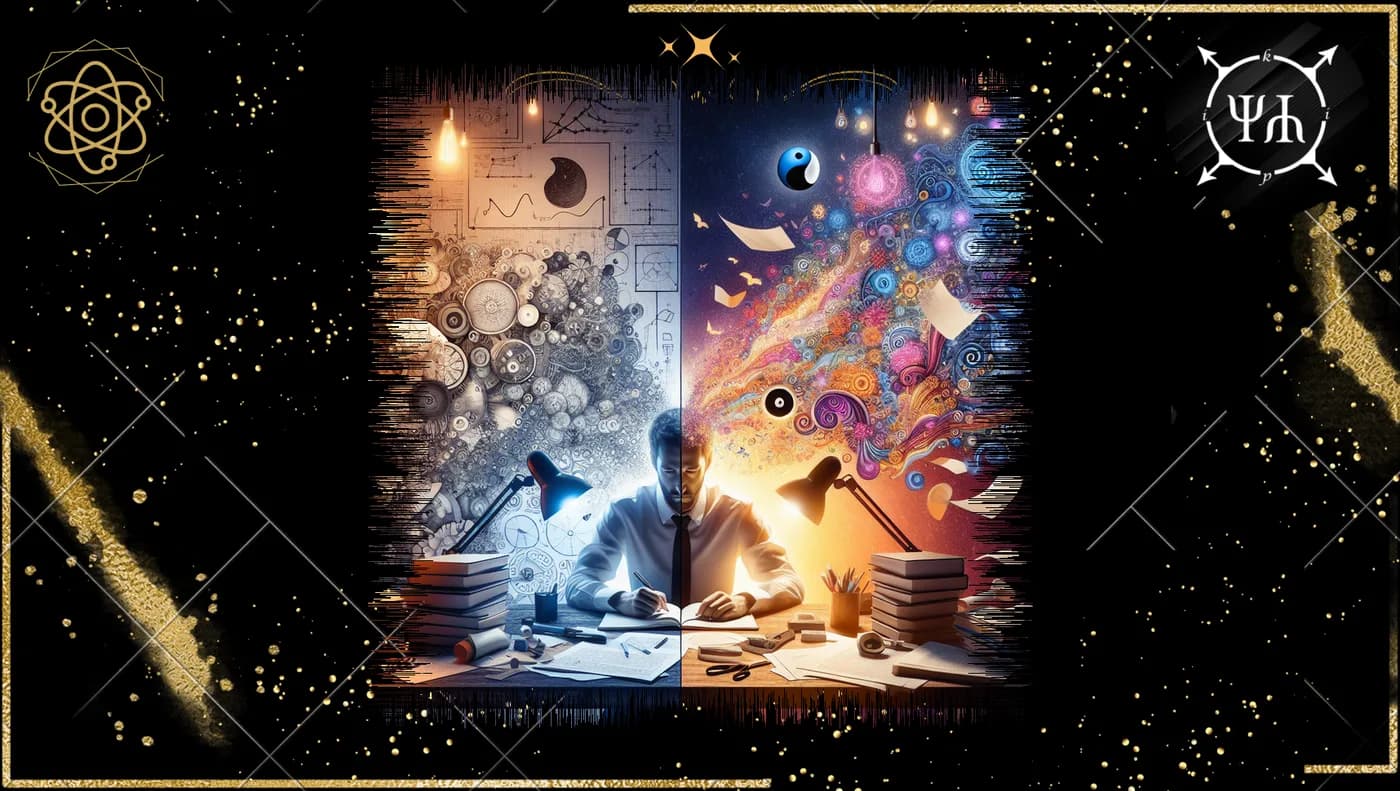
Double Optics: Structure and Chaos, Science and Insomnia
There comes a point in doctoral study when you are no longer a beginner, yet you still do not feel that you have firm ground beneath you. The work is moving, texts are being written, data are being collected, but an insistent question remains inside: what exactly is happening to me right now, and how am I supposed to hold all of this?
This is where double optics appears. The same path begins to look, simultaneously, like rigorously organized scientific work and like a rather chaotic inner process.
The left lens: structure
One part of you is occupied with research. It demands order, evidence, logic, and clear argument. Here, a text is a construction, and every chapter has to bear the weight of the ones that follow.
There is a beauty of its own in this lens. It disciplines you, pulls you together, and keeps thought from spreading in every direction.
The right lens: chaos
But another part lives to a completely different rhythm. It knows sleepless evenings, inner overload, the feeling that a thought is born not according to schedule but in spite of it. Here, structure is always accompanied by doubt, fatigue, and sometimes an almost complete sense of being lost.
This is not a system error; it is part of the reality of the research path. A person cannot be only a machine for analysis. We remain living beings in whom knowledge, anxiety, intuition, and exhaustion coexist at the same time.
Why this is not a contradiction
The farther I go, the more clearly I see it: the problem does not begin when both sides exist in us. It begins when we try to acknowledge only one of them. We want to be either perfectly collected or perfectly spontaneous. Yet real work most often happens at the intersection.
Scientific rigor does not cancel inner chaos. And chaos does not make structure meaningless. On the contrary, the tension between them is often what produces a more precise view.
Before the next turn
It mattered to me to record this duality, because without it, it is difficult to speak honestly about what comes next. Doctoral study is not only method and not only inspiration. It is a way of learning to hold both poles at once.
And perhaps it is precisely in this holding that a more mature research perspective gradually takes shape.
Questions about this article
01What is a researcher's “double optics”?
It is the ability to see doctoral study simultaneously as structured research—with method, data, and argument—and as a living inner process in which doubt, intuition, fatigue, and anxiety coexist. Neither lens cancels the other.
02Why are structure and inner chaos not a contradiction?
Structure protects evidence and coherence, while acknowledging chaos prevents the researcher from being reduced to an abstract analytical machine. Tension between the poles can sharpen perception when neither one is declared the only acceptable state.
03Does “academic insomnia” mean sleep loss is useful for research?
No. Insomnia names strain and instability in this text, not a method for increasing productivity. Regular sleep deficiency impairs attention, learning, decision-making, and health; persistent sleep problems call for changes in routine and, when needed, professional care.
04How can double optics be used in research practice?
A researcher can track project requirements and personal condition separately: divide work into testable steps, record uncertainties, plan recovery, and discuss overload. Recognizing both layers makes it possible to change the process without devaluing rigor or the person doing the work.