
 Telegram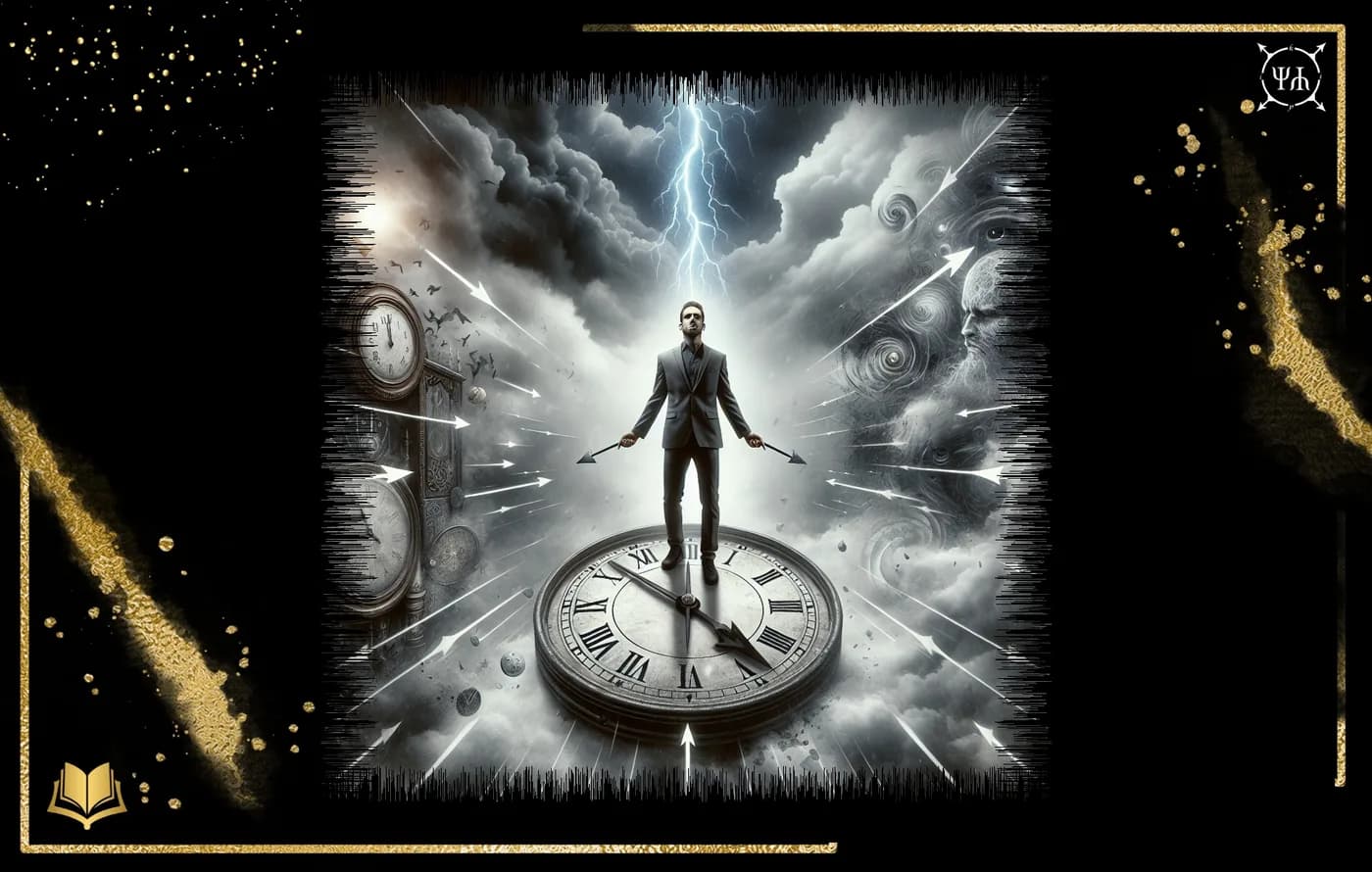

The Vicious Cycle of Stress
The vicious cycle of stress begins either with trauma from the past or with negative thinking in the present. Negative thoughts are projected into the future as fear that the stressful event will happen again or that a new unpleasant event will occur. They then return to the present as a negative-future time perspective. From there, the person automatically moves into a negative past, where they become stuck... and then returns to the present again. In this way, the vicious cycle of stress can continue indefinitely. Such a negative cycle emotionally and spiritually exhausts the person who has created it, and the client is forced to experience it again and again.
The vicious cycle of stress can become an invisible companion in our lives, deeply affecting emotional and physical states. The cycle may feel endless, pulling a person into a whirlpool of anxiety and despair. It is important to notice that such cycles not only capture our attention and energy, but also pull us away from the present moment, interfering with personal growth and psychological well-being. 🚶♂️
The quotation from The Time Cure by Zimbardo and Sword vividly describes recurring patterns of thinking that can trap people inside their own minds. In psychology, such loops are often discussed in connection with cognitive distortions that may have long-term effects on everyday experience. Negative thoughts can begin to organize attention around threat, making stress and worry feel as though they are repeating without end. 💭
For readers today, the theme is especially relevant in a rapidly changing world where stress has become ordinary. Understanding the mechanism of a vicious stress cycle — the pattern underlying our reactions — can be a first step toward seeing the mental trap more clearly. Awareness and stress-management practices, including meditation and cognitive behavioral approaches, may help interrupt the cycle and open a path toward a calmer, fuller life. 🌱
The task for each of us is not to let fears from the past and anxieties about the future eclipse the present. Recognizing and loosening vicious cycles of stress can be a step toward greater emotional freedom and a more balanced life. ✨
Questions about this article
01What is the vicious cycle of stress?
In the model described here, past trauma or negative thoughts in the present create an expectation of future threat. That expectation pulls attention back toward the negative past, so the loop between past, present, and future repeats and sustains stress.
02How does a negative time perspective sustain stress?
A person views the future through fear that an unpleasant event will recur and then returns mentally to painful experiences from the past. This fixation draws attention away from the present and may intensify anxiety and exhaustion.
03What may help a person notice and loosen this cycle?
The author suggests beginning by recognizing the recurring pattern. He names mindfulness, meditation, stress management, and cognitive behavioral approaches as possible supports; suitable help depends on the individual situation.