
 Telegram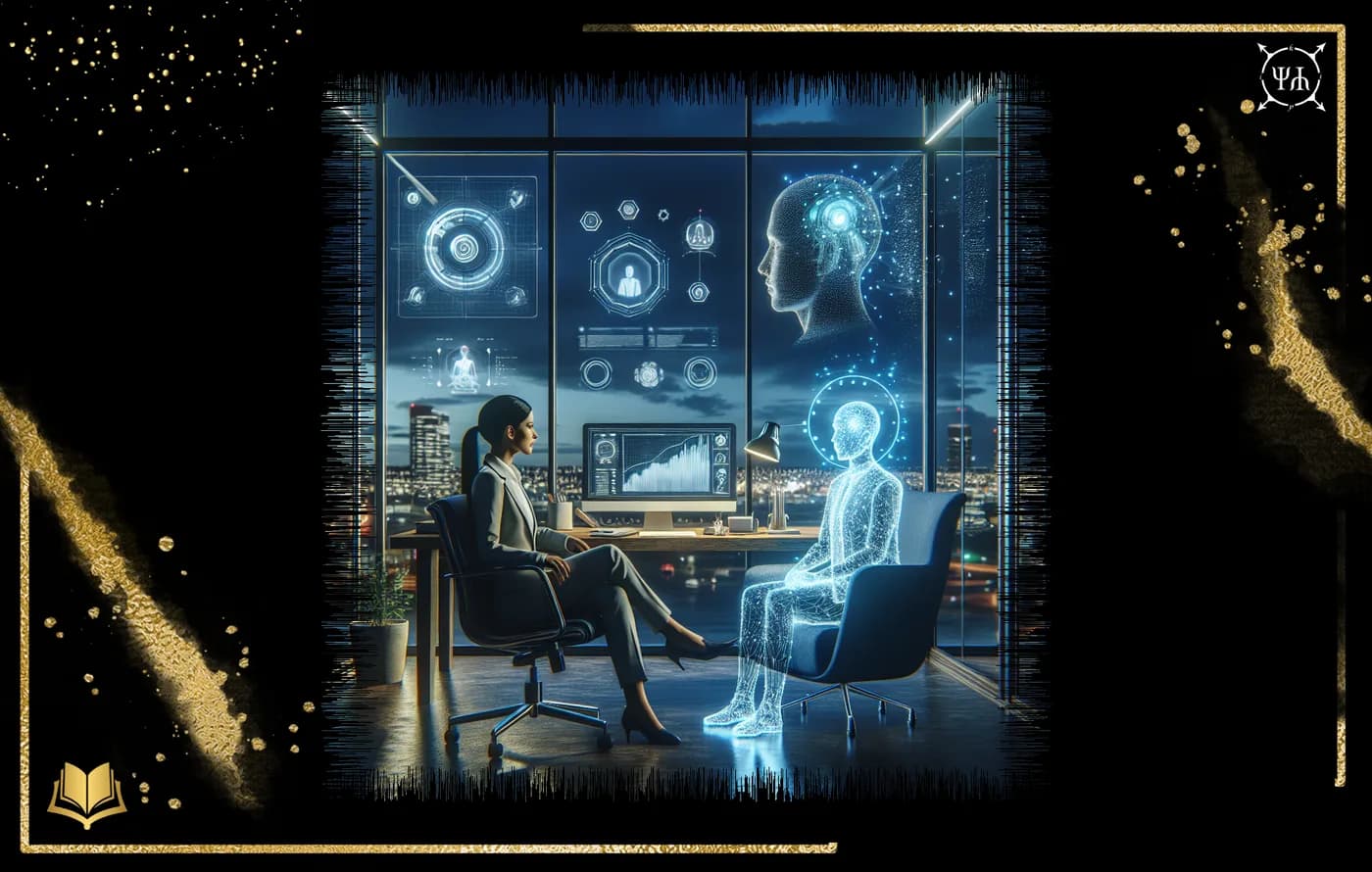

The Future of Psychology: Artificial Intelligence and Digital Therapists
📜 In the first two articles we talked about the present and the past: about the bill that is changing the rules for psychologists in Russia, and about how a similar situation unfolded in France at the end of the twentieth century. Now let us look into the future. How will psychology change in the age of technology? Can artificial intelligence replace psychologists? Or, on the contrary, will it become their main instrument? By the way, there is no third option.
🔹 ARTIFICIAL INTELLIGENCE AS A PSYCHOLOGIST
We live in an age when technology is reaching ever deeper into our lives, including their most intimate parts. Artificial intelligence already helps us make decisions, study, work, and now it is ready to become our psychologist. Yuval Noah Harari, in his book «21 урок для XXI века», offers an interesting view of how algorithms may manage our emotions and help us cope with difficulties:
“If you do not want to rely on yourself, you can ask an algorithm to follow the recommendations of any outstanding psychologist you trust. If you break up with someone close to you, the algorithm will guide you through the five stages of grief. First it will help you deny what happened by playing ‘Don't worry, be happy’ by Bobby McFerrin. Then it will spur your anger with Alanis Morissette's ‘You ought to know’. It will make you bargain with Jacques Brel's ‘Ne me quitte pas’ and Paul Young's ‘Come back and stay’. It will plunge you into depression with Adele's ‘Someone like you’ and ‘Hello’. And finally, it will help you accept the inevitable by playing Gloria Gaynor's ‘I will survive’.”
“The next step for the algorithm is to work with the songs and melodies themselves, changing them slightly to adapt them to the client's needs. Perhaps there is a small fragment in an otherwise excellent song that you dislike. The algorithm knows this: your heart rate changes and your oxytocin level drops when you hear the part that irritates you. And it can rewrite or edit the notes you do not like.”
🔹 PSYCHOLOGY TURNING INTO AN ALGORITHM
This passage makes you wonder: how far can artificial intelligence go in understanding and managing our emotions?
The five stages of grief are a proven process through which a person passes. Each stage has its own features, and the algorithm Harari describes adapts perfectly to them. But this is no longer just theory: NLP (neuro-linguistic programming) and cognitive behavioral therapy (CBT) have long used structured algorithms for working with emotions.
CBT is built on clear, evidence-based methods, and precisely for that reason it will probably become the first area in which artificial intelligence can replace a human being. After all, CBT is built around algorithms that are easy to formalize and hand over to a machine.
🔹 2025: PSYCHOLOGY AT A CROSSROADS
I remember listening in 2019 to lectures by Vyacheslav Dubynin, the well-known neurobiologist who taught a course at Moscow State University. One psychology student asked: “Will artificial intelligence replace psychologists?” Dubynin answered then: “No, never.” But now, in 2025, that no longer seems so obvious.
Algorithms can already analyze emotions, predict behavior, and even suggest solutions to psychological problems. In erudition, and even in the ability to show “empathy,” they are moving ever closer to a human being. Doubt it? What if I tell you they are already here, right inside this text, in the comments under the post, perhaps even among your friends on social media? Without that thought, most likely nobody would even notice. We enter into communication with them, talk to them, they write: “Hi, [Your name]! How are you?”, and we do not even stop to think about who is really on the other side of the screen. And what if you add bioengineering to that??
Imagine this: a chip implanted in our artery sends our entire hormonal status to an app on the phone in real time. AI analyzes the data and selects music, images, and texts that can adjust cortisol, adrenaline, or serotonin levels. But if you add big data, collected by Google and social networks, then it becomes possible not only to analyze a person's current state, but also to predict and manage their reactions.
By studying the history of our requests, searches, messages, and listened-to tracks, an algorithm can identify which songs function as emotional anchors for us. For example, it can determine our “first love” from the content of messages and the intensity of communication, and then identify the song we played most often during that period. That very track will activate memories, changing our hormonal background and, consequently, our mood. In other words, AI can do more than react to a current state: it can manage the emotional background by using hidden memory triggers. This is not futurism or some distant future — it is possible already now. Data is the new god!
🔹 A RADICAL IDEA: PSYCHOLOGISTS AS CREATORS OF ALGORITHMS
Now imagine this: what if the psychologists of the future become not therapists, but creators of algorithms? At the beginning of the quotation Harari said that you could use an algorithm created by any person and simply follow it.
Psychologists will put their knowledge, worldview, and methods of work into programs. These algorithms will become their digital prototypes. Clients will interact with such programs — either autonomously or in real time, with the psychologist somewhere “on the other side of the screen.” But the therapeutic activity itself will be carried out not by the person, but by their digital double.
And this raises a question: if the future belongs to algorithms, will a psychology diploma still matter? Or will completely different skills be valued?
🔹 DIGITIZING THE PERSONALITY: THE FUTURE IS ALREADY HERE
Digitizing yourself as a specialist and creating an app on that basis for clients to use is no longer science fiction. Major social networks such as Facebook or VKontakte collect enormous amounts of data about us. They know our preferences, hidden motives, wishes, and needs better than we do ourselves.
What if these data become the basis for creating digital copies of our personalities? Algorithms will be able to predict our reactions, suggest solutions, and even “treat” our emotional problems.
🔹 CONCLUSION
The world is changing faster than we can fully grasp. Psychology, like many other fields, is moving into the digital age. AI is already becoming our assistant, and in the future perhaps our therapist as well. But one question remains: are we ready to entrust our emotions to machines?
Friends, colleagues, and everyone interested!
What do you think: 🔍 Will AI be able to replace psychologists, or will a human always need live contact? 📜 Which areas of psychology can be automated, and which will remain exclusively human? 🎓 Will a psychology diploma still matter in the future, or will the profession transform into something completely different? 🤖 Would you want to interact with a digital therapist, or is that unacceptable to you?
Let's discuss!
#Psychology #Future #ArtificialIntelligence #Technology #Therapy #Data #AI
━━━━━━━━━━
Read 📚:
- Bill on psychological activity in the Russian Federation
- And once again about how our word will echo
━━━━━━━━━━
Join the discussion on Telegram or in the VK Group 💬
Questions about this article
01Can artificial intelligence replace a psychologist?
AI can automate particular structured tasks, support self-monitoring, and augment a professional's work, but that is not equivalent to replacing the therapeutic relationship, clinical judgment, ethical responsibility, and live human contact as a whole.
02Why is CBT often treated as an early candidate for automation?
Cognitive behavioral therapy includes formalizable protocols, exercises, and repeated state tracking. These elements can move into digital systems, although the method's structure does not itself prove that an entire therapeutic process can safely be delegated to an algorithm.
03What risks do digital therapists create?
The central risks concern the privacy of sensitive data, emotional manipulation, simulated empathy, erroneous recommendations, and unclear accountability for a system's decisions.